U.S. officials from the Securities and Exchange Commission, the Justice Department and the Federal Bureau of Investigation met with Munich prosecutors this week regarding the 1.3-billion-dollar bribe fund run by Siemens, the German multinational technology company.
After talking to the Germans about tracking the financial flows of the largest illicit slush-fund ever discovered, the U.S. investigators would do well to visit Luxembourg on Germany’s western border.
There they could seek information from Clearstream, the international financial clearing house, that might tell them how Siemens moved so much money and where it went. That is because Siemens has the unusual status of being one of only four non-financial companies among 2,500 Clearstream members. It gained membership on the insistence of a former CEO who was fired after a scandal.
Siemens, the German-based multinational technology company that made massive payoffs to get international contracts, has, according to the German press, a bribery slush fund of more than $1.3 billion. It moved money through a network of front companies, mostly in offshore Liechtenstein and the United Arab Emirates. Siemens is being investigated by the U.S. Justice Department and the Securities and Exchange Commission as well as by public prosecutors in Germany and Italy.
How did Siemens officials move so much money about? Investigators ought to take a look at Siemens‘ transactions through Clearstream, the international financial clearing house in Luxembourg, whose clients do not undergo the same due diligence scrutiny that regular banks apply.
Siemens is one of only four non-financial companies (out of 2500) with Clearstream accounts. Here — published for the first time — are listings of Siemens’ Clearstream accounts for 1995, 2000 and 2001.
Speech to conference on Taming the Giant Corporation, organized by Ralph Nader and The Center for Study of Responsive Law, Washington DC, June 8, 2007
The tax haven racket is the biggest scam in the world. It‘s run by the international banks with the cooperation of the world‘s financial powers for the benefit of corporations and the mega-rich. This talk is about strategy, but first you have to know the target, and most Americans, including progressive activist Americans, don‘t know what I‘m going to tell you. And that‘s part of the problem.
Between 1996 and 2000, of U.S. and multi-national corporations operating in the United States, with assets of at least $250 million or sales of at least $50 million, nearly two-thirds paid no U.S. income tax. Over 90 percent reported owing taxes of under 5 percent. One year, six in ten paid less than a million.
This is the dirty little secret of globalization: the end of controls on capital flows and the expansion of the tax haven system from 25 years ago to where it has more than doubled to about 70 tax havens.
The system is a major reason for the growing inequality in the U.S. and between the West and the developing worlds.
The system has given the big banks and corporations and the super-rich mountains of hidden cash they use to control our political systems.
President Bush‘s attorney general, Alberto Gonzales, has come under fire for politicizing the U.S. Justice Department for his dismissals of eight U.S. attorneys, apparently because they didn‘t target Democrats. But using the Justice Department for political ends isn‘t simply an invention of Gonzales or of the President; it‘s an old Bush family tradition.
In politicizing the Justice Department, Bush takes a page from his father. The George H.W. Bush Justice Department 25 years ago balked at investigating and prosecuting the key players in the scandal of the criminal, terrorist-friendly bank, BCCI, and moved only, and in limited fashion, after New York District Attorney Robert Morgenthau forced its hand.
Bush had a strong reason to want Justice to block pursuit of the case: the CIA used BCCI for its black ops, including funneling some of the $2 billion Washington sent to client Osama bin Laden and running money for the illegal Iran-Contra operation.
When it comes to tax cheats, the government has been vocal about catching the little guys but doesn’t spotlight the big-time frauds, like Swift Boat financier Sam Wyly (shown here), who happens to be a top-tier Republican contributor.
Wyly cheated the U.S. of at least $300 million in taxes. The money that paid for the Swift Boat campaign was your money!
But Wyly was not only the financier of the scam to discredit John Kerry during the 2004 presidential campaign. He and his brother were George W. Bush’s ninth greatest career contributors, Bush Pioneers, who collected $100,000 for the 2000 and 2004 presidential campaigns. They also funded other leading Republicans. Sam Wyly, since 1997 has given Republicans more than $1 million and his brother Charles and wife have donated more than $1.3 million. That‘s your money!
Wyly did his cheating through an offshore scheme that hid $1 billion in family profits via Isle of Man shell companies that existed only on paper, were registered under front men to hide the Wylys’ names, and were used to carry out transactions and launder money. And that’s only the hidden income that was found. The Dallas mogul, with a $1 billion admitted net worth, may be guilty of the biggest personal tax fraud in U.S. history.
Now that the U.S. Congress is investigating the truth of President George W. Bush’s statements about the Iraq war, they might look into one of his most startling assertions: that there was a link between Saddam Hussein and Osama bin Laden.
Critics dismissed that as an invention. They were wrong. There was a link, but not the one Bush was selling. The link between Hussein and Bin Laden was their banker, BCCI. But the link went beyond the dictator and the jihadist — it passed through Saudi Arabia and stretched all the way to George W. Bush and his father.
Los legisladores de Estados Unidos que investigan la veracidad de los argumentos del presidente George W. Bush para invadir Iraq deberÃan analizar una de sus afirmaciones más resonantes: la del vÃnculo entre Saddam Hussein y Osama bin Laden.
Los crÃticos de Bush desacreditaron tal aseveración, a la que calificaron de invención. Estaban equivocados. El vÃnculo existÃa, pero no era el que el presidente le vendió al público.
There is movement on the Hill to go after tax shelters and enforcement against tax cheats.
With acute budget pressures, the time is ripe.
The Democrats are in a box. They have promised to eliminate the deficit, not raise taxes, to expand health care and more for Americans. Nobody is going to press for tax increases. The only place to find cash is the tax gap, to figure out how to go after the corporations and people who cheat. Members of Congress are actively talking about the problem.
Legislation is coming out of the Senate. Senator Carl Levin is pushing the idea of criminalizing the proceeds of tax evasion, which would be remarkable. The House Banking Committee will have bills. There is likely to be something out of Finance and Ways and Means.
Is Citibank Spain a tax cheat?
New Internationalist, Aug 2006
With help from a whistleblower, I followed the money trail through the offshore operations of Citigroup, the world‘s biggest bank, and discovered that Spanish bankers handling their client’s offshore accounts were getting commissions via an internal accounting system instead of on the regular books.
It is the same internal system that Citigroup used in the 1970s to compensate currency traders in Paris, London, Frankfurt and elsewhere who booked trades in the tax haven Nassau, the Bahamas. They were exposed by an insider, were investigated by the SEC and Congress, and had to pay millions in back taxes. Is this happening again?
This report describes and details a history of tax evasion by the world‘s largest
financial conglomerate, Citigroup. Going back decades, it is a story of
repeated, aggressive tax evasion for itself and clients, depriving governments
and therefore citizens of huge amounts of funds and carried out with relative
impunity.
Investigators find evidence that Siemens (German electronics & engineering firm), Total (French oil company), and BAE (British arms conglomerate) paid multi-millions of dollars in bribes through bank accounts in Switzerland and other offshore centers.
France and the UK argue national security to block inquiries. Concern is more likely the “security” of top officials who got kickbacks.
Spain‘s discovery that funding for Basque terrorist group ETA goes through tax havens is dramatic proof that “national security” lies not in protecting but in dismantling the global offshore secrecy network.
Who might have killed former Russian spy Litvinenko? Julia Svetlichnaya, a Russian living in London, told the press there that she had met Litvinenko and learned that he was collecting information about mega-rich Russian entrepreneurs to use for blackmail.
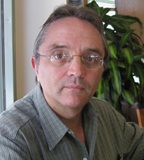
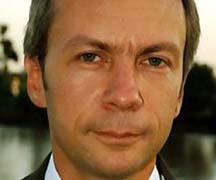
It has not been reported before that Litvinenko’s collaborator, Yevgeny Limarev, had visited Elena Collongues-Popova (shown here), a Russian woman in Paris, to seek information connecting ex-Yukos official Alexei Golubovich to bribery of the former president of Lithuania. And Svetlichnaya hasn’t told the press that she worked for the very same Golubovich.
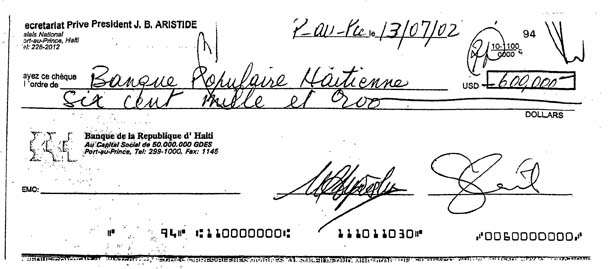
The company is under investigation by the SEC, the United States Attorney in Newark, New Jersey, and a U.S. federal grand jury for allegedly paying bribes to Jean-Bertrand Aristide, former president of Haiti. Five nationally prominent US Republicans, the independent board members of a corporation that has been charged with paying hundreds of thousands of dollars in bribes to get a sweetheart telecom deal in Haiti, are leaving its board. The company is IDT, the world’s third-ranked international phone company.
IDT is run by James Courter (shown here), a former New Jersey Republican congressman. The other Republicans are Rudy Boschwitz, former senator from Minnesota; James S. Gilmore III, former Virginia governor; Thomas Slade Gorton III, former senator from Washington State; Jack Kemp, former congressman from New York and 1996 vice presidential nominee; and Jeane Kirkpatrick, the former U.S. ambassador to the UN under President Ronald Reagan.
The U.S. Justice Department is withholding agreement to share assets seized from Haitian drug traffickers to finance a lawsuit by the Haitian government charging former President Jean-Bertrand Aristide with taking bribes.
The suit is based on allegations by a former executive of the telecom company IDT that before Aristide left the country in 2004, he took hundreds of thousands of dollars in kickbacks from IDT, which is connected to prominent U.S. Republicans.
Sept 18, 2006 Is top Justice official protecting a former client accused of bribery?
The Justice Department’s Criminal Division, headed by a Bush political appointee who gave legal advice to a company accused of bribing Haiti’s former president, is blocking an agreement to share seized Haitian drug money that would help Haiti pursue the bribery case in U.S. courts. The accused company is run by a former Republican congressman.
The Criminal Division chief, Alice Fisher, formerly a registered lobbyist for HCA, the healthcare company founded by the father of Republican Senate Majority Leader Bill Frist, is a recess appointee. Her approval was blocked by Senators concerned about her qualifications and about her participation in a government meeting on abusive interrogations at the U.S. military prison camp at Guantanamo.
When Andrew Cuomo became HUD Secretary in 1997, he axed a federal program that had saved the US $2.2 billion between 1994 and 1997 and reinstituted a system that lost the government money while earning billions for favored friends.
He used the power of his office to target a former HUD official who had assisted his predecessor in operating the successful program. A HUD legal vendetta destroyed the official’s company before the Justice Department finally admitted there was no case and dropped it.
Now he is running for Attorney General of New York State.
When Andrew Cuomo became HUD Secretary in 1997, he reversed the policy of selling defaulted mortgages so that families could keep their homes. Instead, he chose to foreclose on mortgages, which meant that families lost their homes and insiders cleaned up on fire-sale priced properties. The program he axed had saved the U.S. $2.2 billion between 1994 and 1997. Cuomo fired the former HUD official whose company designed the program.
That wasn‘t the only money big money lost under Cuomo. HUD reported at the time that $59 billion was missing! It couldn‘t say where the money went, because it failed to produce audited financial statements.
Two U.S. lawsuits charge that former Haitian President Jean-Bertrand Aristide and his associates accepted hundreds of thousands of dollars in kickbacks from politically connected U.S. telecom companies.
Lawsuits filed this Fall challenge the former priest‘s image of political purity and raise claims that both he and U.S. corporate executives scammed illegal profits off the hemisphere‘s poorest population.
In one suit, a fired executive charged his former employer, the U.S. telecom IDT (Newark, NJ), with corruption, defamation, and intimidation under the New Jersey anti-racketeering law. In the second, the government of Haiti contends that IDT, Fusion (New York, NY) and several other North American telecoms violated the federal RICO anti-racketeering statute. Both suits allege that Aristide, now in exile in South Africa, and his associates, took kickbacks.
Add former Haitian president Jean-Bertrand Aristide to the long list of corrupt and repressive officials who have used Western banks and companies and offshore tax havens to plunder their countries and launder the stolen money.
Aristide and his associates looted government coffers, wrote checks to front companies for nonexistent purchases, padded invoices to get kickbacks from vendors, secretly owned companies that cheated Haiti of taxes, and laundered the money they stole through shell companies and secret bank accounts set up in the United States and the offshore tax havens of Turks and Caicos and the British Virgin Islands.
Nearly $20 million has been documented as stolen between 2001, when Aristide took office as president for the second time, and 2004, when he fled or was forced out of the country according to varying accounts.
In the space of four or five years, Halliburton, the international oil services and construction conglomerate that is under attack for overcharging and underperforming in Iraq, has gone from reporting 70 or 80 offshore subsidiaries in its annual SEC filing to just two, both in the Cayman Islands. Offshore networks had become a central part of Halliburton’s management and financial strategy. When current United States Vice President Dick Cheney was CEO of Halliburton from 1995 to 2000, the company’s offshore subsidiaries increased from nine to 44. By the year 2001, that had nearly doubled. Now most of them have gone missing!
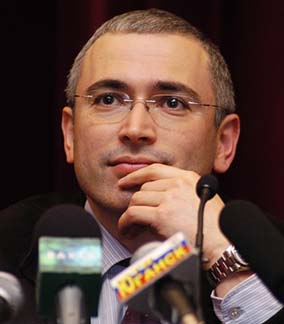
In mid-May a Moscow court will issue a verdict in the trial of Mikhail Khodorkovsky, the figure behind Yukos Oil, who was once known as Russia’s richest man. Khodorkovsky, who a few years ago was worth more than $15 billion, is on trial for fraud and tax evasion, much of it made possible through the use of offshore shell companies.
Khodorkovsky has been in prison since 2003, when he was charged with embezzlement and for rigging a privatization auction of the petrochemical company, Apatit. Some critics argue that Khodorkovsky is being held up as a symbol of Russia’s ruling class of exorbitantly wealthy businessmen, and that his trial is politically motivated. Senator John McCain – in a recent statement before the Senate – likened the charges against the young oligarch to the overthrow of a government saying, a creeping coup against the forces of democracy and market capitalism in Russia is threatening the foundation of the U.S.-Russia relationship.
In mid-May a Moscow court will issue a verdict in the trial of Mikhail Khodorkovsky, the figure behind Yukos Oil, who was once known as Russia’s richest man. Khodorkovsky, who a few years ago was worth more than $15 billion, is on trial for fraud and tax evasion, much of it made possible through the use of offshore shell companies.
Khodorkovsky has been in prison since 2003, when he was charged with embezzlement and for rigging a privatization auction of the petrochemical company, Apatit. Some critics argue that Khodorkovsky is being held up as a symbol of Russia’s ruling class of exorbitantly wealthy businessmen, and that his trial is politically motivated.
But Western corporations and, by extension, the Western media may in fact be equally motivated to obscure the facts and make Khodorkovsky into a capitalist martyr.
A new global movement is tracking the increasing number of offshore tax shelters and pressuring governments to make multinationals pay up.
As Americans fret over their personal income taxes, there is a movement afoot to reduce the tax burden on ordinary people by getting corporations and wealthy individuals to pay their fair share.
Last month, the Tax Justice Network (www.taxjustice.net/) issued a report based on publicly available statistics from the Bank of International Settlements and Merrill Lynch, the investment company. The data showed the following:
–Approximately $11.5 trillion of assets are held offshore by high net-worth individuals, or about a third of the total global GDP, the value of goods and services, which in 2003 was $36.2 trillion.
–The annual income that these assets might be expected to earn amounts to $860 billion annually.
–The tax not paid as a result of these funds being held offshore would exceed $255 billion a year.
In December of 2004, there was a horrific fire in a Buenos Aires disco called the Cromagnon Republic. Three rock fans shot off flares that set fire to the ceiling and engulfed the overcrowded discotheque in flames and smoke. In the rush to get out, 200 people were killed and 700 injured, most from trampling and smoke inhalation. The main entrance had been wired shut, and some of the emergency exits were locked, blocking escape.
In the days that followed, thousands of the victims’ parents and friends marched in the streets and demanded justice. A judge started proceedings for manslaughter and froze $20 million belonging to the owner, Omar Chaban. However, investigators soon discovered that Chaban appeared in no official disco documents; he was just the administrator. The legal owners of the property and the disco company were offshore shell corporations registered in the tax haven of Uruguay, the neighboring country. The listed owner of the enterprise was a Uruguayan straw man in his 70s who had no money.
The debate about cutting taxes for corporations and the wealthy is a false one. The issue is not whether transnational corporations and the very rich benefit from tax cuts, but that many of them walk away from all taxes. A General Accounting Office report found that between 1996 and 2000, 61 percent of all U.S. companies paid zero federal taxes. They accomplish this primarily through profit laundering, a phrase that ought to be on the lips of every social critic.


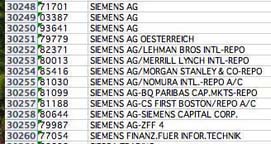
 It moved money through a network of front companies, mostly in offshore Liechtenstein and the United Arab Emirates. Siemens is being investigated by the U.S. Justice Department and the Securities and Exchange Commission as well as by public prosecutors in Germany and Italy.
  Bush had a strong reason to want Justice to block pursuit of the case: the CIA used BCCI for its black ops, including funneling some of the $2 billion Washington sent to client Osama bin Laden and running money for the illegal Iran-Contra operation.
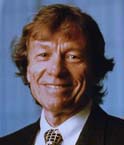 (shown here), who happens to be a top-tier Republican contributor.
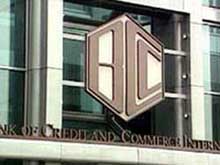 Critics dismissed that as an invention. They were wrong. There was a link, but not the one Bush was selling. The link between Hussein and Bin Laden was their banker, BCCI. But the link went beyond the dictator and the jihadist — it passed through Saudi Arabia and stretched all the way to George W. Bush and his father.

![Fees for Friends: Vendetta [Andrew Cuomo Scandal]](https://www.thekomisarscoop.com/wp-content/uploads/2006/08/catherine_austin_fitts2.jpg "Fees for Friends: Vendetta [Andrew Cuomo Scandal]")