Blog
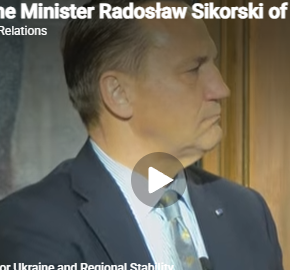
Sept 25, 2026 – The most bizarre comment of Polish Foreign Minister Radoslaw Sikorski at the Council on Foreign Relations yesterday was his comment about the Ukrainian Nazi who organized massacres of tens of thousands of Poles during WWII and who has been praised as a hero by Ukraine. He called him “flawed.” FLAWED?? But look, if you are a Russophobe promoting Ukraine you can’t say bad things about a Nazi who slaughtered your countrymen, can you?
Blog
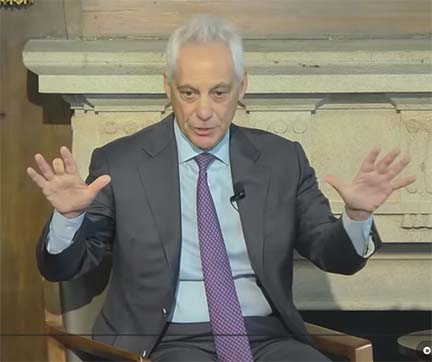
May 15, 2026 – At a recent Council on Foreign Relations meeting on U.S. foreign policy, Rahm Emanuel, on the long list for the Democratic nomination for president, didn’t mention Gaza, the only international issue that galvanizes Democratic voters, except to say the Trump-Netanyahu strategy didn’t work: “You unilaterally acted in Lebanon and in Gaza, and you got Hezbollah and Hamas.”
Blog
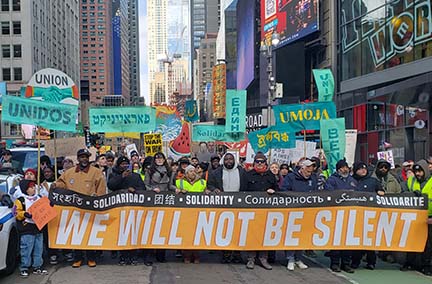
March 31, 2026 – Are you old enough to have marched in a protest when the major issue for Americans was the war in Vietnam? Way back in the 60s. Did the signs mention LBJ but not Vietnam or the war? How about a march against U.S. aggression in Iraq decades later? Just about Bush but not his war in Iraq? I still have a bumper sticker with the French tricolor and the slogan, “I drink Bordeaux and I vote.”
Blog
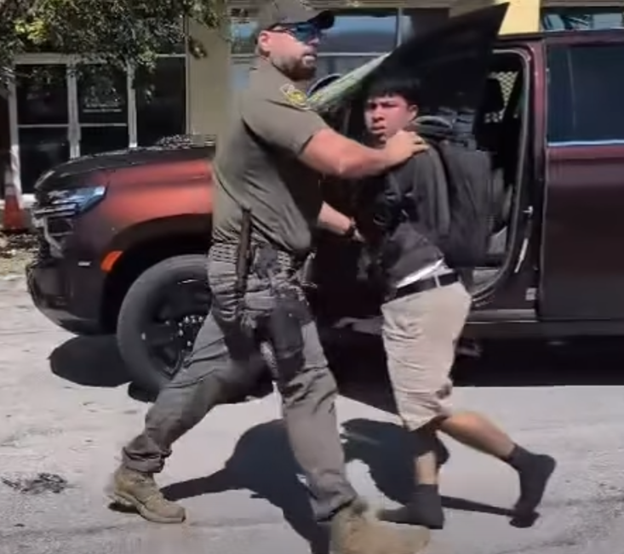
Feb 15, 2026 – I love Key West, one of my favorite cities. And on Saturday Feb 14 an ICE storm trooper attacked a kid on a bike because he was the wrong color.
Blog
Feb 8, 2026 – See the key takeaways of brilliant James Rosen exposé in NYT that just revealed Pentagon threat to America in seven pages of a sealed Watergate file. Not revealed until now.
The key point of this stunning story based on documents which were sealed for 50 years, is that President Richard Nixon testified under oath that the most serious threat to his presidency came not from political opponents or the media, but from a covert espionage operation run by the U.S. military’s top commanders—the Joint Chiefs of Staff.
Blog
Jan 29, 2026 – At a Council on Foreign Relations reception last night I met Therese Marie Postel, who told me she worked at the UN for the U.S. State Department. We were at a drinks table before a meeting. She said she wrote the Board of Peace (ie the U.S. seizes Gaza) UN Security Council resolution. (Three others heard the conversation.) I said, “But the Palestinians…” She grabbed her wine and beat a hasty retreat. But now history knows who wrote that imperialist decree: it was crafted by Therese Marie Postel. (Po******@***te.gov as posted by www.securitycouncilreport.org/). She smiles, Palestinians die.
Blog
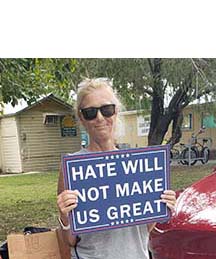
Jan 11, 2026- About two hundred protesters stood along Truman Avenue, a main street in Key West, to add their signs and voices to the national protests against Donald Trump’s ICE death squad execution of Renee Good. Cars passing on the road created a cacophony of horns to signal their support. Even the iconic Key West rooster paid attention.
Blog
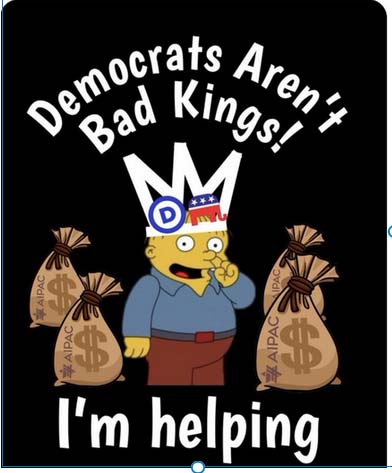
Oct 20, 2025 – The only official signs in the No Kings march were the anodyne “No Kings Since 1776” and “We Have Friends Everywhere.” They could have been for a TV sit-com series or a new breakfast cereal. Because the neo-con Democrats who organized the events in NYC and across the country were against Trump but not for anything.
Blog

Oct 19, 2025 – Ironic that the Indigenous Peoples Parade in New York this year took place the same time and a few blocks away from the massive New York “No Kings” demonstration. On Saturday there were probably fewer than 50 dozen marchers and performers among the Native Americans gathering at Madison Square Park and marching from 27th Street inside unnecessary metal police barriers down Broadway at 12 noon, compared to the estimated 100K that took off from Times Square down Seventh Avenue at 11 am. I went to both.
Blog
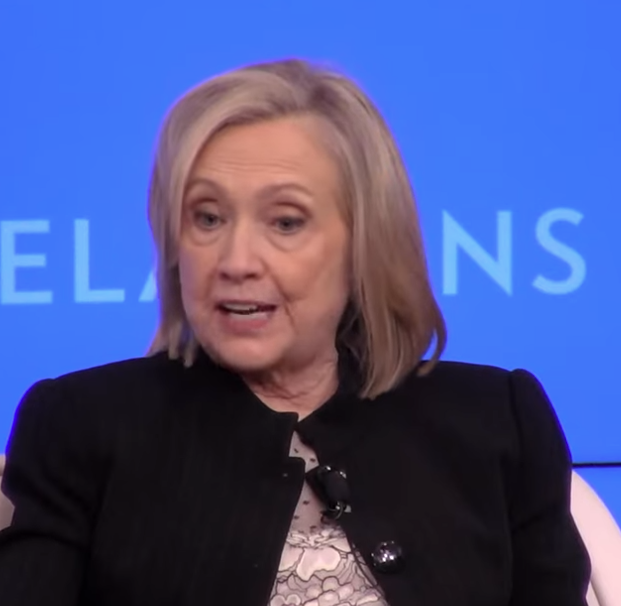
Oct 12, 2025 – Hillary Clinton a few days ago replied to my question about Ukraine at the Council on Foreign Relations. She and colleague John Sullivan are revealed as either liars or so ignorant of reasons for the U.S. Ukraine war as to be utter fools.
Blog
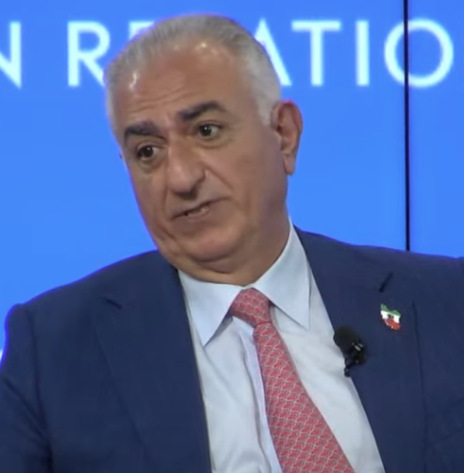
Oct 5, 2025 – Why would the Council on Foreign Relations host a public meeting in Washington with Reza Pahlavi, son of the Shah of Iran
deposed in 1979? And what might that have to do with indications he is part of a movement to restore the monarchy?
Blog
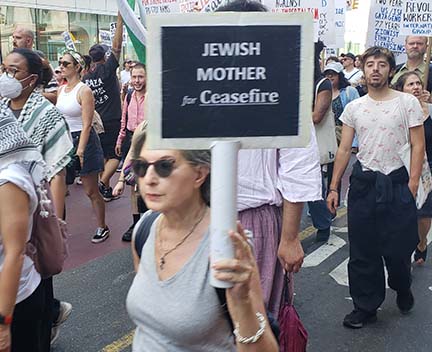
Oct 4, 2025 –
Here are photos from the Free Palestine march in Greenwich Village today.
Blog
Sept 26, 2025 – The corruption of the U.S. government-aligned “human rights” establishment was excruciatingly on display at the Council on Foreign Relations today.
Blog
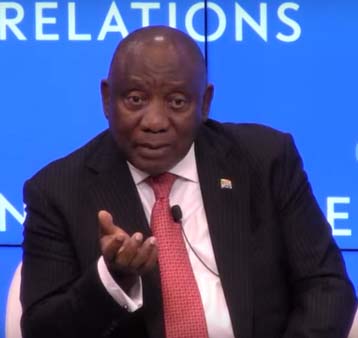
Sept 25, 2025 – South African President Cyril Ramaphosa says he learned from the fight against apartheid in his country that the legal route is the way to go to combat apartheid by Israel.
He said that replying to a question I asked at the Council on Foreign Relations Tuesday, September 23, 2025.
Blog
Sept 22, 2025 – At the Council on Foreign Relations today I heard Canadian Prime Minister Mark Carney show how delusional and out of touch the political-corporate elite is with world events. Carney was governor of the Bank of Canada, then of the Bank of England. He bragged about cutting capital gains and income taxes, all boons to the very rich. But on to foreign policy, Gaza and Ukraine.
Blog, Russia

The Council on Foreign Relations had an event called “Challenges to Global Press Freedom,” Monday, July 21, 2025. Much of it dealt with “disinformation.” I wanted to ask a question about the impact of mainstream media writing disinformation, especially in view of revelations by Tulsi Gabbard of fake stories about alleged Russian influence in the 2016 election. And which MSM continues to disparage. As I was not called on (I am a known critic of “acceptable” views), I sent this to two of the speakers, Graciela Mochkoifsky, Dean, CUNY Graduate School of Journalism, and Richard Stengel, political analyst at MSNBC, former editor of Time, former State Department Undersecretary of Public Diplomacy and Public Affairs (ie the U.S. propaganda agency).
Blog
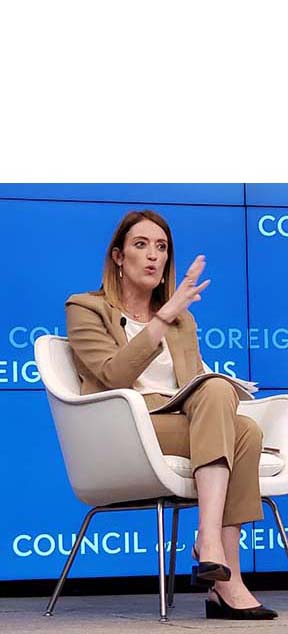
June 12, 2025 – Roberta Metsola, from Malta, the president of the European Parliament, spoke at the Council on Foreign Relations June 9th and talked effusively about the Parliament’s support for “the values of liberal democracy.” She dismissed the Parliament’s failure to act to stop the Israeli genocide in Gaza.
Blog
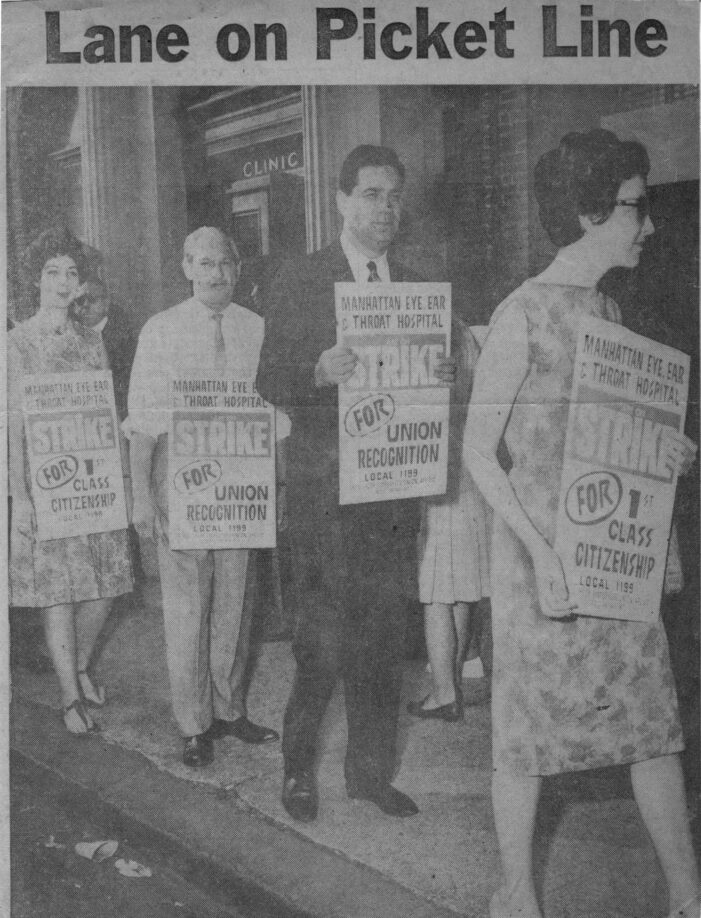
May 25, 2025 – Susan Brownmiller, writer, feminist and my longtime friend since the 1960s has died. Here is a photo of us on a picket line in 1962 supporting the rights of workers to organize at Beth-El Hospital in Brooklyn. She is at the right, I am at the left. Behind her is Assemblyman Mark Lane.
Blog
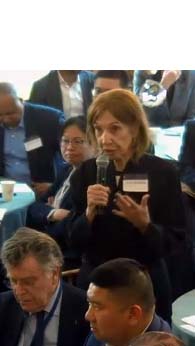
At a meeting of the Council on Foreign Relations May 20th, some foreign policy experts from the U.S., Germany and Australia explained western “values” The event was the capstone of a meeting of The Council of Councils, a network of 28 policy institutes set up by the U.S. group to promote American policies through “consensus-building among influential opinion leaders from both established and emerging nations, with the ultimate purpose of injecting the conclusions of its deliberations into high-level foreign policy circles within members’ countries.” In less fancy language, their governments should do what the U.S. wants them to do.
Blog
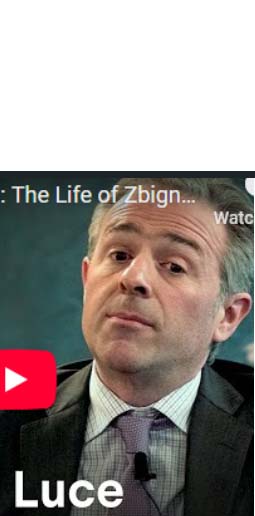
At the Council on Foreign Relations May 14, 2025, I asked Ed Luce, author of new book about Jimmy Carter’s National Security Advisor Zbigniew Brzezinski, who admitted he supported the mujaheddin in Afghanistan to draw in the Russians and make it “their Vietnam” – though in the end, after the Russians left in a year, the US went in and it was their Vietnam for 20 years — whether his Polish hatred of Russia became a permanent element of U.S. foreign policy.
Blog
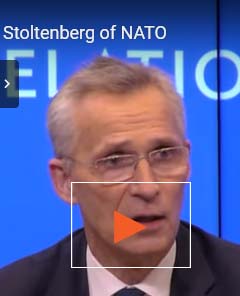
Sept 26. 2024 – Hello. I’m Lucy Komisar. I’m a journalist.
So, I wanted to ask whether any of these things had led to the situation now: First, the NATO expansion to the east, against the promise made to Gorbachev. The support of the 2014 coup against an elected government of Ukraine because it wanted an economic deal with Russia instead of the EU. Eight years of Ukraine bombing the breakaway Donbas of Russia(n) speakers who were opposed to the coup. And then the U.S. supporting the military that ended up on the border, about to invade, in the Donbas that caused the Russian invasion. Did any of this happen? And by the way, you mentioned the Minsk Accords, and those were violated because the U.S. and the U.K. told Zelensky don’t do it. So it seems to me, from my vantage point, that NATO and the U.S. have been using this war as a proxy war against the Russians, and the poor Ukrainians have been the cannon fodder.
Blog
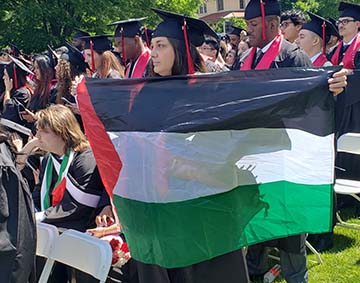
June 2, 2024 – President Frank Wu of Queens College of the public City University of New York (CUNY) celebrated its 100th anniversary commencement May 30th by having New York Police Department troops stationed outside the campus gates. They were placed so that people entering could not see them. He has for a month locked the college to anyone without credentials, “to bar disruption.”
Audio/Video, Blog, Books/Film, Films

Director Germán Kral’s fine “Adiós Buenos Aires” is a realistic and sensitive look at the lives of working-class Argentines desperately trying to survive and even prosper in the face of a government that does little for their welfare and, to top that, suddenly in 2001 limits withdrawals from their own bank accounts. All true. But the film is not depressing. It’s warm and appealing.
Audio/Video, Blog, Books/Film, Films
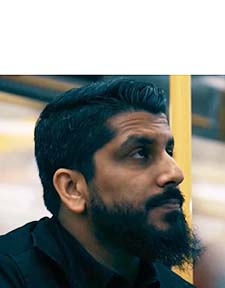
“Phantom Parrot’ is an alarming film about a repressive UK law aimed at individuals the UK government doesn’t like because they support victims of repression by countries the UK does like. It was directed by Kate Stonehill and produced by Steven Lake and presented by The Double Exposure film festival in Washington in November.
Audio/Video, Blog, Books/Film, Films, Russia
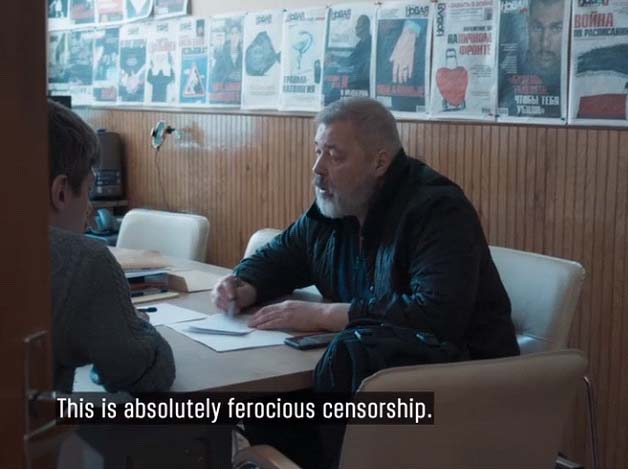
I visited Russia twice, before and after the collapse of Communism and even attempted to learn Russian, not getting much beyond waiter and taxi talk, though I can pick up film and political speakers with the help of subtitles. So as an investigative reporter, not a film critic, to understand this film about a Russian editor who won a Nobel Prize, I sent a screening of this film to world-class Russia expert, Richard Sakwa. He is Emeritus Professor of Russian and European politics at the University of Kent (England). He was also the head of the University’s Politics and International Relations department, has lived and taught in Russia and has published sixteen books on Soviet, Russian and post-communist affairs.

